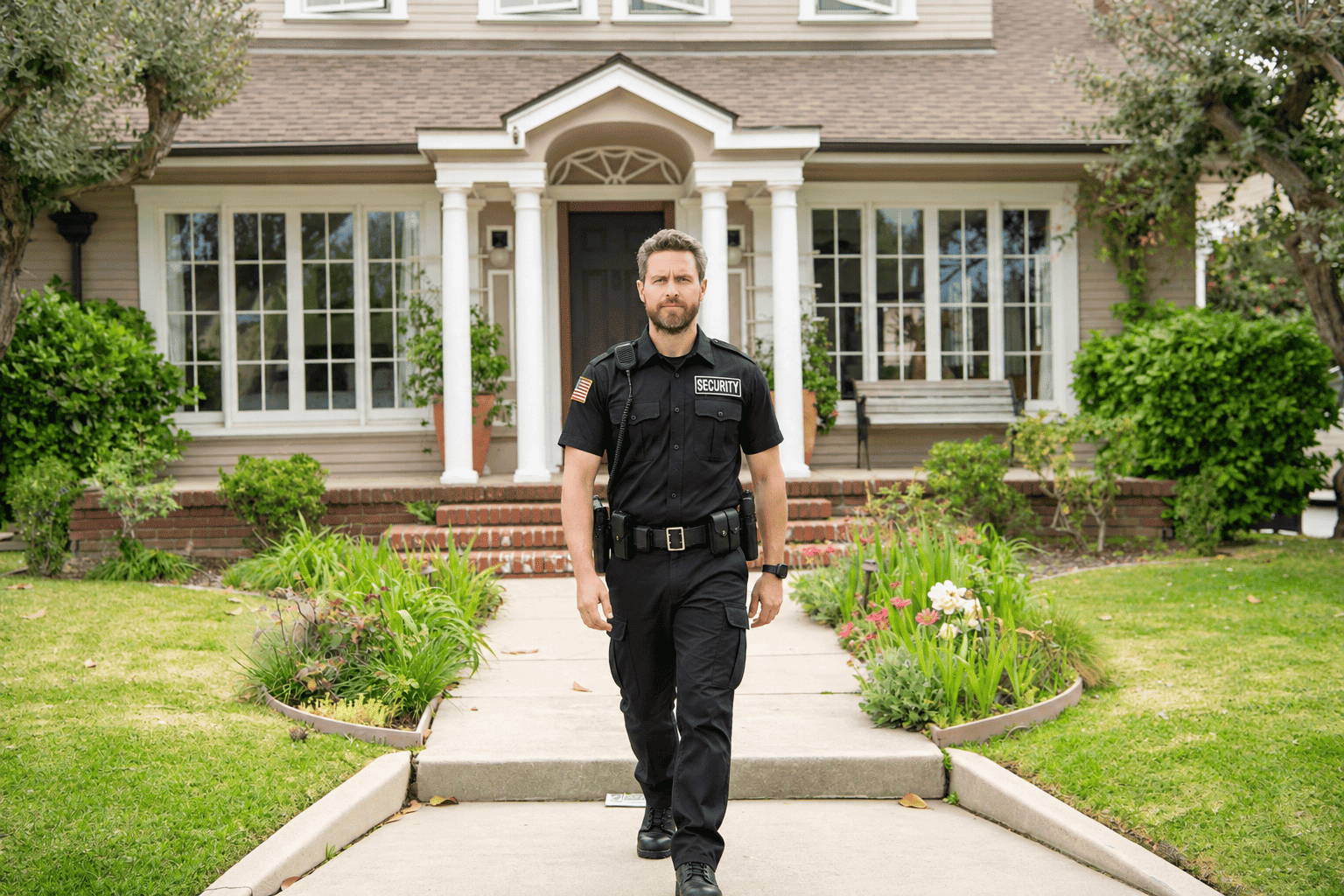
A home is where people expect to feel most at ease. For executives, prominent families and owners of private estates, it is also where exposure is often greatest.
Daily routines are predictable. Staff, contractors and visitors come and go. Family members follow regular schedules for school, work and social activities.
Many residences already have gates, cameras and alarm systems. However, having security equipment in place does not confirm that a property is properly protected.
A camera may record an entrance without anyone reviewing the footage. A gate may stop vehicles while pedestrian routes remain open. A former contractor may still hold an access code.
A residential security assessment answers a simple question: does the current security match the actual risks facing the household?
It is an independent review of the property, its surroundings, the people who live there and the measures already in place. The findings help homeowners decide what to keep, what to improve and what is unnecessary.
The right approach treats a private residence as a living environment, not a controlled facility. Well-designed residential and estate security services are designed to protect people, property and privacy without disrupting normal life.
This guide explains the common risks residential properties face, what a professional assessment covers and practical ways to strengthen protection.
Common Security Risks in Residential Properties
Every home has weak points. The goal is not to remove every possible risk, but to understand which ones matter for a specific household.
Wealth or property value alone does not mean a family faces a high threat. A proper review separates real, credible risks from assumptions.
Physical Security and Property Vulnerabilities
Physical security is the foundation of residential protection. Technology helps, but it cannot make up for weak doors, poor locks or open boundaries.
Common physical weak points include:
- Secondary doors, patio doors and garage entrances with weaker locks than the main door.
- Ground-floor and easily reached upper-floor windows.
- Gaps in walls, fences or hedges along the property line.
- Outbuildings, sheds and pool houses that are rarely checked.
- Poor lighting around entrances, driveways and paths.
- Landscaping that gives cover close to the house.
Larger estates add more complexity. Several entrances, long boundaries and multiple buildings mean more places that need attention.
At the same time, any added locks or barriers must still allow people to leave quickly in an emergency. Safety should never be reduced to make entry harder.
Unauthorized Access and Visitor Management
Many security problems involve people who were allowed in. Busy households often have a steady flow of staff, contractors, delivery drivers and guests.
Common gaps include:
- No clear process for checking who is at the gate or door.
- Gate codes, keys or access cards that are never changed.
- Former employees or contractors who still have access.
- Contractors working on the property without supervision.
- Deliveries left unattended or accepted without checks.
The aim is not to treat household staff with suspicion. It is to have fair and consistent rules that protect everyone, including the staff themselves.
Family Safety and Lifestyle-Related Risks
For most homeowners, the main purpose of security is to protect the people inside the home.
Risk often comes from routine and visibility. Examples include:
- Predictable school runs, gym visits or travel patterns.
- Family members sharing locations, photos or plans on social media.
- Public records or news coverage that reveal the home address.
- Smart-home devices and cameras with weak passwords.
- Periods when the home is empty during travel.
Children, elderly relatives and guests may need different arrangements. Any safety measures should build confidence, not fear.
Children in particular should not carry complex security duties. Clear and simple guidance works better than strict rules.
Key Areas Covered in a Residential Security Assessment
A residential security assessment, sometimes called a home safety assessment, is a structured review of threats, weak points and existing protection.
It is not a shopping list of equipment. It is a basis for deciding what level of security is right for the household.
Depending on the scope, a review may look at:
- Personal safety: risks to household members, staff and guests.
- Physical security: doors, windows, locks, gates and boundaries.
- Electronic security: cameras, alarms, intercoms and access control.
- Daily operations: visitor, delivery and contractor procedures.
- Privacy: what information about the household is publicly available.
- Emergency readiness: communication, escape routes and response plans.
- Assets: artwork, jewelry, vehicles and other valuables.
The findings should be shared in a confidential report. It should list the main risks and rank recommendations by priority.
Property Layout and Access Point Evaluation
The assessment starts with how the property is laid out and how people move through it.
A consultant will typically review:
- All vehicle and pedestrian entrances, including service routes.
- The condition of boundaries such as walls, fences and hedges.
- External doors, accessible windows and garage connections.
- Outbuildings, storage areas and detached structures.
- Camera coverage and whether it records useful images day and night.
- Lighting along driveways, paths and entry points.
- Escape routes and safe areas inside the home.
The review also considers how the home is actually used. Entertaining, deliveries, staffing and family movement all affect where protection is needed.
For historic or architecturally significant homes, changes may need special approval. Security should work with the character of the property, not against it.
Neighborhood and Environmental Risk Factors
A home cannot be assessed in isolation. The surrounding area shapes the level and type of risk.
Relevant factors include:
- Local crime patterns and recent incidents nearby.
- How visible the property is from roads, trails or neighboring land.
- Distance from police, fire and medical response.
- Whether the home sits in a gated community, rural area or city center.
- Natural hazards such as wildfires, storms or flooding.
- Public attention linked to the owner’s business or profile.
A remote rural estate faces different challenges from a city townhouse. Response times, lighting and boundary length can change the right approach completely.
Where there are credible threats to someone’s personal safety, the assessment may need to go further. This can include specialist protective planning and coordination with law enforcement.
How to Improve Residential and Estate Security
Once the risks are clear, the next step is choosing the right residential security solutions. The best choice is not always the most expensive one.
Sometimes better procedures or small upgrades to existing systems are enough. Other households need trained personnel and integrated monitoring.
A few practical home security tips apply to almost every residence:
- Change gate codes, alarm codes and Wi-Fi passwords regularly.
- Remove access for former staff and contractors right away.
- Keep entrances, driveways and paths well lit.
- Trim landscaping that offers cover near doors and windows.
- Limit what family members share online about locations and travel.
- Test alarms and cameras on a regular schedule.
- Agree on a simple emergency plan that everyone understands.
For higher-profile households, the following measures often make the biggest difference.
Professional On-Site Security Personnel
Technology can detect a problem. People can judge it and respond to it.
Trained on-site personnel provide a human layer that cameras and alarms cannot replace. They can verify visitors, notice unusual activity and act quickly when something is wrong.
For a private residence, personnel should be:
- Discreet and low-profile, so the home still feels like a home.
- Properly trained, vetted and supervised.
- Familiar with the family’s routines and preferences.
- Scheduled around occupancy, travel and the current threat level.
Coverage does not have to be fixed. It can increase during events, travel or periods of higher visibility, and scale back when risk is lower.
Access Control and Visitor Screening
Controlling who enters the property is one of the most effective ways to reduce risk.
Good access control is clear and simple for legitimate visitors and difficult for everyone else. Key steps include:
- Checking the identity of visitors before opening gates or doors.
- Giving contractors and service providers temporary, limited access.
- Keeping a record of who entered and when.
- Reviewing access permissions whenever staff or contractors change.
- Setting clear rules for deliveries and unexpected callers.
Automated gates are common on larger properties. They also need regular safety checks and maintenance, as powered gates can cause injury if poorly maintained.
Security Technology and Monitoring Integration
Cameras, alarms, intercoms and lighting work best when they operate as one system, not separate devices.
Before adding technology, it helps to ask:
- What exactly should this system achieve?
- Who will watch the alerts, and how fast can they respond?
- Will cameras give clear images at night and in bad weather?
- What happens during a power or internet outage?
- Who can access live video and recordings?
- Is the system protected against hacking?
More cameras do not automatically mean better protection. Cameras should cover entrances and boundaries, not private living spaces, and should avoid recording neighbors’ property where possible.
An alarm that sounds with no one ready to respond offers limited value. Monitoring and response plans matter as much as the equipment itself.
Why Residential Security Requires a Layered Protection Approach
No single measure protects a home on its own. A strong gate can be bypassed on foot. A camera can record a break-in without stopping it.
A layered approach combines several measures so that each one supports the others. If one layer fails, the next one still provides protection.
A typical layered setup includes:
- The outer boundary: walls, fences, gates and lighting that define the property.
- Controlled entry: visitor screening, access control and clear delivery rules.
- The building itself: strong doors, quality locks and secure windows.
- Detection and monitoring: alarms, cameras and alerts that someone actually responds to.
- People and procedures: trained personnel, staff awareness and emergency plans.
The point is not to add obstacles everywhere. Each layer should address a specific risk found during the assessment.
For some homes, good physical security and a reliable alarm are enough. For others, credible threats may justify on-site personnel and full monitoring.
Layers also need regular review. Routines change, staff change and new risks appear. A plan that worked last year may not fit today.
This is the approach behind effective residential security programs, which combine personnel, procedures and technology while keeping a low profile.
Integrating Residential Security With Executive Protection
For executives and public figures, risk does not stop at the front gate. It follows them to the office, on the road and during travel.
When home security and executive protection are managed separately, gaps appear. Information is not shared, plans do not match and handovers become weak points.
An integrated approach connects the residence with the principal’s wider movements. This can include:
- Shared planning between residential teams and protection teams.
- Secure transportation between home, office and events.
- Advance planning for travel, public appearances and special events.
- One clear chain of communication during an incident.
- Security plans that adjust when routines, travel or threat levels change.
Family members benefit as well. School runs, daily activities and periods of high visibility can be covered within the same plan.
The result is consistent protection as clients move between personal, professional and public settings, with one team accountable for the whole picture.
Building a Safer and More Secure Residential Environment
Good residential security is not about turning a home into a fortress. It is about protecting the people inside while letting them live comfortably and privately.
That starts with understanding the real risks. A professional residential security assessment shows what is working, what is missing and what is unnecessary.
From there, homeowners can choose measures that fit their property, their routines and their level of exposure. The right plan combines physical security, trained people, clear procedures and well-managed technology.
Security should also be reviewed as life changes. New staff, new travel patterns or a rise in public profile can all shift the level of risk.
If you are unsure whether your current arrangements match the risks your household faces, an independent review is the best place to start.
Contact our team to discuss a confidential residential security assessment for your home or estate.