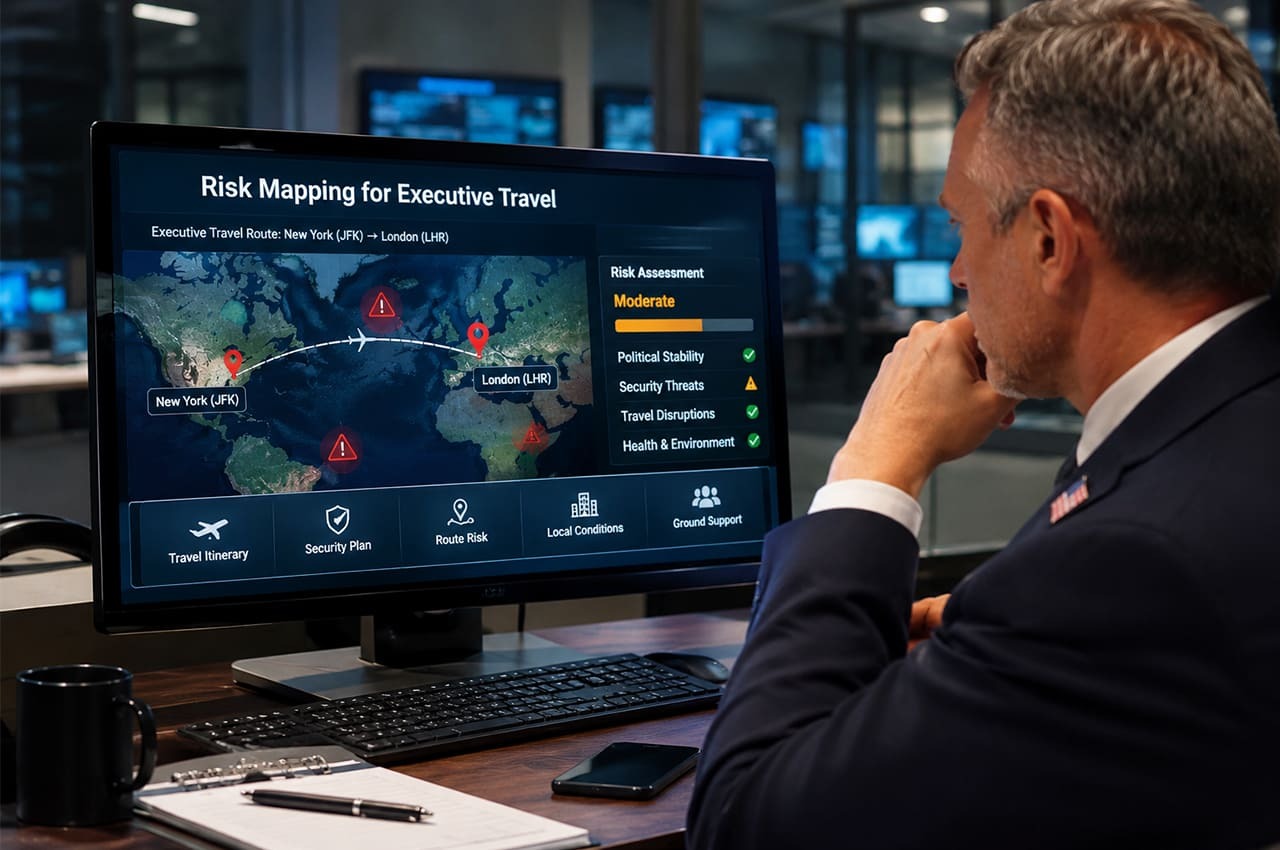
You must be safe inside your residence, but what about when you step outside to travel? Everyone needs a break, travelling from one place to another needs to be peaceful, not threatful.
Executives like senior leaders and VIPs are already in danger half of the time because of being crowded everywhere they go, as not everyone is a fan and sometimes incidents like “ Targeted attack during executive travel” occurs, here’s a real-life example of Brian Thompson, CEO of UnitedHealthcare where brain was in New York City to attend a corporate investor conference. His travel placed him away from his normal environment, and he was attacked in a public area while heading to the conference venue.
The incident became a stark example of how executive travel can create exposure beyond the conference, meeting, or destination itself, risk can exist throughout the executive’s travel footprint, including public-facing activities, transitions between locations, and periods outside formal security arrangements.
This guide explores Executive Travel Risk Mapping and how organizations can identify, assess, and manage risks throughout an executive’s journey. It covers the key elements of an effective travel risk management framework, the steps to build a structured risk mapping process, and the intelligence, planning, and technology capabilities needed to support executive safety at scale.
7 Essential Steps to Building an Executive Travel Security Plan
Step 1: Understand the Executive’s Travel Requirements
Executive travel planning begins with understanding the purpose of the trip and what the executive needs to accomplish such as important meetings, public appearances, tight schedules, and multiple destinations can create different security considerations that needs to be addressed before departure.
Start by reviewing the trip objectives, key engagements, expected travel duration, and how much flexibility the schedule allows. Consider the executive’s personal requirements, accessibility needs, confidentiality concerns, and preferred pace of travel. These details help establish a travel plan that supports both business objectives and personal safety.
Travel documentation, entry requirements, visa restrictions, and transit arrangements should also be reviewed in advance. Establishing clear responsibilities for approvals, security coordination, decision-making, and emergency response ensures everyone involved understands their role before the trip begins.
Step 2: Identify Destination and Itinerary Risks
Understanding how to identify travel risks begins with looking beyond the destination itself. Local crime conditions, political developments, public demonstrations, regional instability, and an executive’s public visibility can all influence travel safety. Even familiar destinations may present new challenges when circumstances change.
A thorough Business Travel Risk Assessment considers the places an executive will visit, planned meetings, accommodations, transportation, and scheduled activities. Reviewing these details alongside current threat intelligence helps organizations recognize potential concerns early and make better-informed travel decisions before departure.
Step 3: Assess the Likelihood and Impact of Each Risk
Once potential threats have been identified, how do organizations determine which risks deserve the most attention? The answer lies in evaluating both the likelihood of an incident occurring and its potential impact on the executive, the business, and travel operations.
A structured risk matrix makes this process easier to understand by categorizing risks according to their severity and probability. This approach helps security teams prioritize resources, identify high-risk areas, and make informed decisions rather than treating every concern equally. Effective Security Risk Management depends on understanding which risks require immediate attention and which can be managed through routine precautions.
Step 4: Develop Risk Mitigation and Contingency Strategies
Identifying risks is only useful when organizations know how to respond. Developing mitigation strategies involves determining what measures can reduce exposure, minimize disruption, and support the executive throughout the trip. These measures may include adjusting travel arrangements, additional protective support, enhanced monitoring, or alternative plans when conditions change.
Contingency planning is equally important because not every situation unfolds as expected. Medical emergencies, transportation disruptions, unexpected threats, or changing local conditions may require quick decisions. Incorporating these possibilities into Executive Protection Planning that helps establish clear responsibilities, response procedures, and alternative arrangements before an incident occurs.
Step 5: Plan Safe Routes, Transportation, and Emergency Responses
How an executive moves between destinations is an important part of travel security planning. Transportation providers, local conditions, schedule flexibility, reliability, and the overall itinerary should be evaluated before travel begins. Planning these arrangements in advance helps reduce uncertainty and allows the executive to move between business commitments with fewer unnecessary disruptions.
Emergency response planning should also be part of this process. Security teams need to understand communication procedures, available support, escalation responsibilities, and emergency resources at the destination.
Step 6: Implement Real-Time Risk Monitoring and Response Mechanisms
Travel conditions can change quickly, making it important to continue monitoring risks after the executive has departed. Weather events, civil unrest, transportation interruptions, emerging threats, and local security developments may affect previously approved travel plans. Knowing how to recognize these changes and determine when action is required is essential to an effective travel security program.
Real-time monitoring combines relevant intelligence with reliable communication and clear decision-making procedures. Security teams can use updated information to reassess existing risks, coordinate with stakeholders, and adjust plans as necessary. This ongoing process strengthens Travel Security Risk Management by ensuring decisions reflect current conditions rather than relying solely on assessments completed before departure.
Step 7: Review, Learn, and Improve the Travel Risk Management Plan
What happens after an executive completes a trip? Reviewing the travel experience provides an opportunity to evaluate how well the security plan worked, which decisions were effective, and where improvements may be needed. Disruptions, changes in risk conditions, communication challenges, and feedback from the executive or security personnel can all contribute to this review.
Documenting these lessons helps organizations refine future assessments, update procedures, and improve coordination. Executive Protection Planning should be an evolving process, not a one-time exercise. Regular reviews help keep travel protocols relevant to changing threats, executive requirements, and business priorities while strengthening the organization’s overall travel preparedness.
Integrate Executive Protection into Corporate Travel Policy
A corporate travel policy is a set of guidelines that explains how employees plan, book, and manage business trips. Adding executive protection to this policy helps organizations consider security risks before travel, establish approval procedures, and set clear communication and emergency protocols.
Guidance such as ISO 31030 helps organizations take a structured approach to travel risk management, including identifying potential threats, assessing risks, preparing preventive measures, and responding to unexpected situations. This allows businesses to make more informed travel decisions while protecting their executives and meeting their duty of care responsibilities.
Final Thoughts on Risk Mapping for Executive Travel
Life is unpredictable, and travel can bring uncertainties you may not always see coming. But when there is an opportunity to make a journey safer, it is worth taking. Executive Travel Risk Mapping is not just about protecting an executive at one destination. It is about looking at the bigger picture, protecting lives, maintaining confidence, safeguarding business continuity, and making every journey more informed and prepared. Having the right security partner matters. Identifying risks, recognizing patterns, and understanding potential threats before they escalate is what effective security planning is all about.
Contact us to discuss your executive travel security needs and take a proactive approach to protecting the people who matter most.